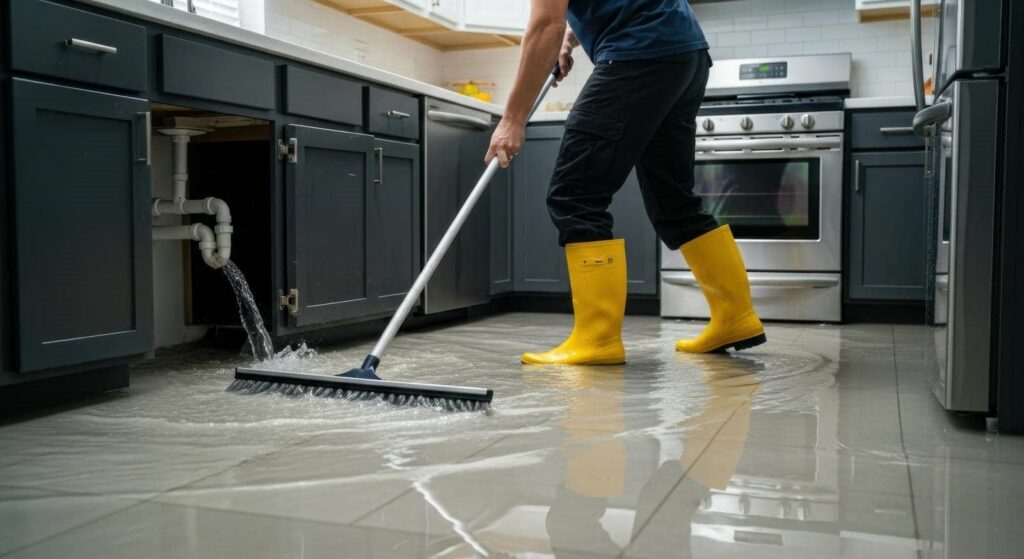
Water damage can escalate quickly, turning a minor leak into a major disaster if not addressed promptly. It’s vital to act decisively and systematically to mitigate the damage. Understanding how to identify the source and employ the right tools can make a significant difference. In the following sections, you’ll discover essential tips to guarantee effective water extraction and safeguard your home against future incidents.
Key Takeaways
- Identify the source of water damage by inspecting leaks, moisture signs, and appliances to address the problem effectively.
- Ensure safety by turning off utilities, wearing protective gear, and shutting off the main water and gas valves.
- Use essential tools like submersible pumps and industrial wet/dry vacuums for efficient water removal.
- Apply quick extraction methods, utilizing powerful vacuums and pumps to swiftly eliminate standing water.
- Implement preventative measures, such as regular gutter cleaning and waterproofing, to avoid future water damage.
Identify the Source of Water Damage Quickly
When you discover water damage in your home, identifying the source quickly is essential to preventing further issues.
Start your damage assessment by inspecting areas prone to leaks, like plumbing fixtures, roofs, and basements. Look for visible signs of moisture, such as stains or mold growth. Pay attention to common water sources like overflowing sinks, broken pipes, or external drainage problems.
Don’t overlook appliances like dishwashers and washing machines, as they can also leak. If you can’t locate the source immediately, consider using moisture meters to identify hidden leaks.
Document your findings to guide repairs and insurance claims. Prompt action not only mitigates damage but also fosters a sense of security in your living space.
Ensure Your Safety Before Water Extraction Begins
Before you start extracting water, it’s essential to turn off all utilities to prevent electrical hazards.
Make certain you’re wearing protective gear—gloves, boots, and masks—to shield yourself from contaminants.
Taking these precautions guarantees your safety as you begin the extraction process.
Turn Off Utilities
As you prepare to address water damage in your home, turning off utilities is an essential step to secure your safety and prevent further complications.
Following these emergency procedures can help you avoid hazardous situations:
Locate the Main Water Shutoff Valve: This valve is typically near where the water line enters your home, often in the basement or crawl space.
Turn Off Electricity: Switch off the main circuit breaker to eliminate any risk of electrical shock from water contact.
Gas Shutoff: If you smell gas, don’t use electrical switches. Instead, locate the gas shutoff valve, usually near your gas meter, and turn it off.
Taking these actions secures a safer environment as you begin the water extraction process.
Wear Protective Gear
Ensuring your safety is paramount as you prepare to extract water from your home.
Begin by donning appropriate protective clothing, such as waterproof boots, gloves, and a mask, to shield yourself from contaminants. Mold and bacteria can thrive in stagnant water, making safety equipment essential. Use eye protection to guard against splashes and airborne particles.
If the water is deep or potentially contaminated, consider a full-body suit for added security. Always opt for gear designed for water extraction scenarios, as this will provide the best protection.
Finally, keep a first-aid kit nearby in case of accidents. By prioritizing your safety with the right protective gear, you’ll confidently tackle the extraction process while minimizing health risks.
Essential Tools for Effective Water Removal: What You Need
Effective water removal requires a well-equipped toolkit to tackle the challenges of flooding or leaks.
To efficiently manage the situation, you’ll need the right water extraction equipment and moisture detection tools. Here are three essential items to include in your toolkit:
Submersible Pump: This powerful device helps you remove large volumes of water quickly and efficiently, preventing further damage.
Moisture Meter: Use this tool to pinpoint hidden moisture in walls and floors, ensuring that no damp spots are missed during the extraction process.
Industrial Wet/Dry Vacuum: Ideal for extracting residual water, this versatile vacuum can handle both liquid and solid debris, making it invaluable for cleanup.
Having these tools on hand can make all the difference in effective water removal.
Use Wet Vacuums and Pumps for Quick Extraction
When facing a water emergency, utilizing wet vacuums and pumps is essential for swift extraction.
Start with wet vacuum techniques, focusing on the right settings and attachments for your situation. Confirm your vacuum has a powerful motor for maximum suction, and use the appropriate hose length to reach all affected areas.
For larger volumes of water, pump selection becomes critical. Choose submersible pumps for deep water or utility pumps for shallow areas.
Always check the pump’s capacity and head height to match your needs.
Best Methods for Drying Out Water-Damaged Areas
To successfully dry out water-damaged areas, you must quickly implement a combination of techniques that promote airflow and moisture removal.
Effective dehumidification techniques are vital in this process. Here are three essential methods:
Use High-Powered Fans: Position fans to create strong air circulation, directing airflow towards damp surfaces to speed up evaporation.
Dehumidifiers: Place dehumidifiers strategically in affected areas to lower humidity levels, aiding in moisture extraction.
Open Windows and Doors: If weather permits, open windows and doors to enhance natural ventilation, allowing fresh air to replace humid air.
When to Call Professionals for Severe Water Damage
If your home experiences severe water damage, knowing when to call in professionals can save you time and prevent further issues.
You should reach out for professional services if you notice extensive flooding, mold growth, or structural damage. Additionally, if the water has been standing for over 24 hours, the risk of secondary damage increases considerably.
Professionals have the expertise and equipment needed to assess and mitigate the situation effectively. If you’re uncertain about the extent of the damage, it’s wise to consult experts. They can provide a thorough inspection and help you understand your options.
Preventing Future Water Damage: Essential Measures
While water damage can strike unexpectedly, implementing proactive measures greatly reduces your vulnerability.
Start by ensuring your drainage systems are functioning properly. Regularly inspect and clean gutters to prevent overflow.
Next, invest in effective waterproofing solutions for your basement and foundation. This will create a barrier against moisture intrusion.
Finally, monitor your plumbing for leaks or wear, as small issues can escalate quickly.
- Install sump pumps to manage excess groundwater.
- Apply sealants to exterior walls to block moisture entry.
- Landscape wisely to direct water away from your home.
Frequently Asked Questions
How Can I Prevent Mold Growth After Water Extraction?
To prevent mold growth after water extraction, maintain humidity control below 50% with dehumidifiers, guarantee proper ventilation, and promptly remove wet materials. Regularly inspect areas for moisture to guarantee effective mold prevention and safeguard your home.
What Insurance Coverage Do I Need for Water Damage?
You need a thorough water damage coverage policy with adequate policy limits. Review your homeowner’s insurance carefully, ensuring it includes coverage for both sudden incidents and gradual damage to fully protect your property.
Can I Extract Water Myself Without Professional Help?
Yes, you can extract water yourself using effective water extraction techniques and DIY equipment. Make certain you have a wet/dry vacuum, fans for drying, and proper safety gear to minimize risks during the process.
How Long Does It Take for a Home to Dry Completely?
It typically takes 3 to 7 days for a home to dry completely, depending on the drying process and moisture levels. Using dehumidifiers and fans can expedite this timeline, ensuring thorough drying throughout your space.
What Are Common Signs of Hidden Water Damage?
You’ll notice common signs of hidden water damage like peeling paint, warped floors, or musty odors. Using moisture detection tools, you can identify hidden leaks before they escalate, ensuring your home remains safe and sound.
Recap
In the aftermath of water damage, acting swiftly is like steering a ship through a storm every second counts. By following these tips, you can effectively manage the situation and minimize damage, ensuring your home remains a safe harbor. Remember, if the damage feels overwhelming, don’t hesitate to call in the professionals. Regular maintenance and preparedness will keep your home resilient against future water-related threats, so you can sail smoothly through any storm that comes your way.